top of page
| DISCRIMINATION

AROUND THE GLOBE, THE USE OF CRIMINAL BACKGROUND CHECKS IS RISING.
Through widespread access to criminal records, people are subject to repeated scrutiny and assessment. Although a number of laws regulate how criminal records may be used in hiring, nothing in the law says an employer can’t ultimately refuse to hire someone on the basis of a criminal record.


INFOGRAPHIC

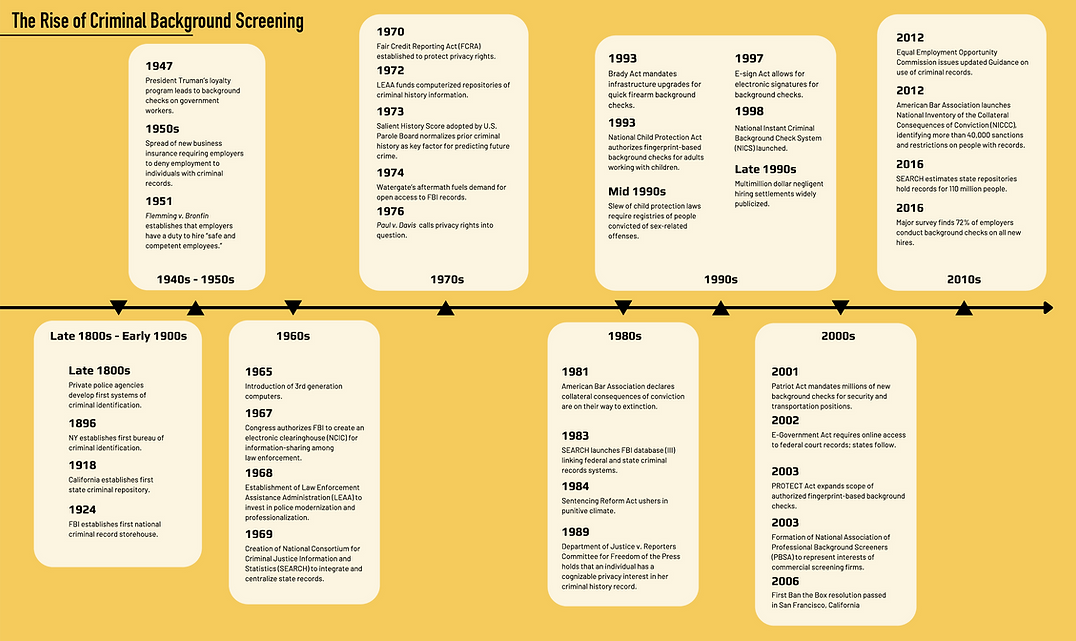

INFOGRAPHIC
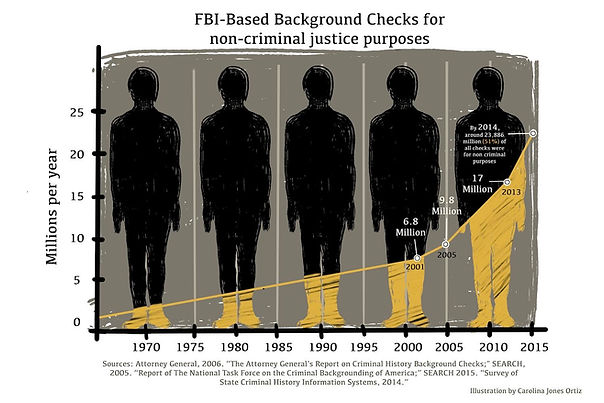
FBI-based background checks for non criminal justice purposes
Melissa Burch and Carolina Jones Ortiz
While most criminal background checks draw from public court records, since the 70s, Congress has steadily granted more and more access to FBI records. By 2005, nearly half of all FBI-based criminal background checks were conducted for non-criminal justice related purposes.


bottom of page